Is La Jolla Cove Free?
La Jolla Cove is free public coastline with no gate and no ticket, but the sea cave, the contemporary art museum and parking each follow their own rules. Here is what actually costs money.
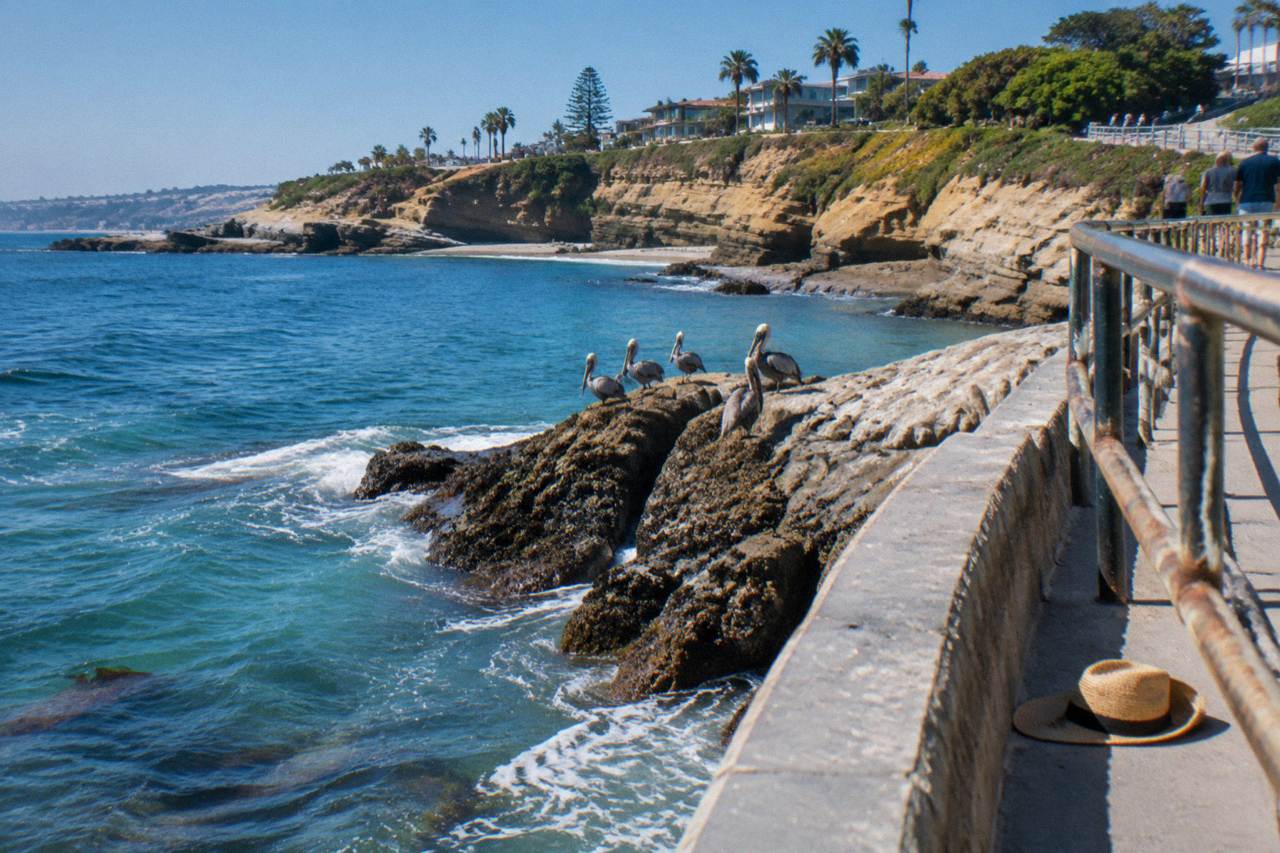
Is La Jolla Cove Free?
Yes. La Jolla Cove itself is free: it is public coastline with no gate, no ticket booth and no admission charge, and the walkway above the water costs nothing to use. What is not free sits in a ring around it. The sea cave below charges entry, the museum up the street charges most days, and parking follows whatever the posted sign at your spot happens to say.
La Jolla Cove is one of the most photographed corners of the San Diego coast: a small curved inlet where calm water sits against rocky ground, and where the evening light pulls a steady crowd of photographers, swimmers and people who simply came to look. The question on most visitors' lists is not whether the view is worth the trip. It is whether getting down to the water costs anything.
The answer for the Cove itself is a clean no. There is no gate, no booth and no station collecting fees. The sand, the water and the view are public the way any city beach is public, and nobody checks a ticket on the walkway above the rocks. You can arrive with an empty wallet, walk the whole curve of the inlet, watch the sun go down and leave without having paid anyone anything. That is the whole honest answer to the headline question, and everything else on this page is the fine print around it.
The fine print matters, because San Diego punishes loose use of the word free. The city's attractions sort into genuinely free, conditionally free and paid, and the La Jolla neighborhood contains all three within a short stroll of each other. Calling the whole area free would be wrong. Calling the Cove itself free is exactly right, and the difference between those two sentences is the difference between a planned day and an annoyed one.
The Cove also pairs well with the rest of a free San Diego day. The city's pay what you want walks run downtown and on the harbor, and the Downtown And Waterfront Walk From The Gaslamp Arch, rated 4.72 across 150 GuruWalk reviews, makes a natural morning half of a day that ends at the water's edge in La Jolla (See this free tour). The full pairing, and the second walk that stays inside La Jolla itself, is laid out further down this page.
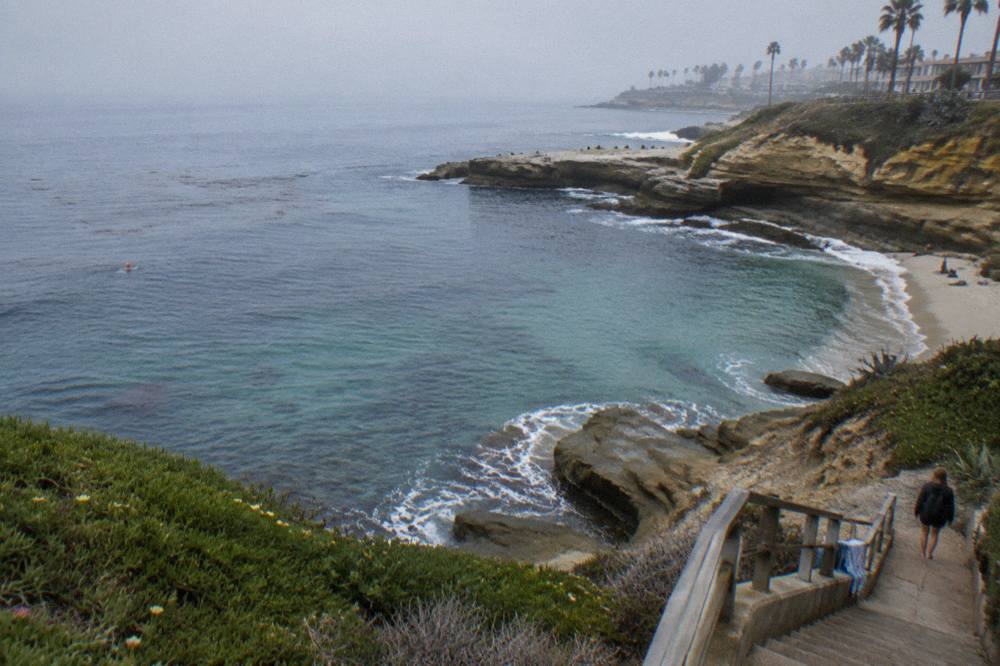
For a wider sweep of the neighborhood, the guide to free things to do in La Jolla covers the beaches, parks and viewing spots beyond the Cove itself.
What Costs Money Around La Jolla Cove?
Three things near the Cove take money. Sunny Jim Cave is entered through the adjoining store and charges, with the current price posted at the entrance rather than published in advance. The Museum of Contemporary Art San Diego's La Jolla location is $25, free on the third Thursday of each month and for visitors 25 and under. Parking has no confirmed published rate, so the sign at your spot is the only authority.
Start with the cave, because it is the one people trip over. Sunny Jim Cave sits at the Cove and is reached through the adjoining store: you walk in off the street, pay at the counter and descend a staircase cut into the rock. The store sets the price and posts it at the entrance, and no confirmed current figure is published in advance, so the number on the door is the authority. Looking at the cave from the walkway above costs nothing at all. Only the stairs inside charge.
The museum is the second paid item, and its rule is more generous than most. The La Jolla location of the Museum of Contemporary Art San Diego charges $25, with two standing exceptions: the third Thursday of each month is free, and so is entry for visitors 25 and under, as its own visit page sets out. That makes it one of the few art museums in the county where a free window and an age window overlap, and both are worth knowing before you plan the day.
Parking is the third item and the least settled, and it gets its own section below. The short version: no published rate covers parking at the Cove, so any claim that it is free, or that it costs a fixed amount, should be checked against the meter or sign in front of you at the moment you park.
| Spot or activity | Cost | The condition |
|---|---|---|
| The Cove beach and water | Free | Public coastline, no gate or booth |
| The coastal walkway above | Free | Open to walk, no ticket |
| Tide pools on the rocky shelves | Free | Go at low tide |
| Sunny Jim Cave | Paid | Price posted at the store entrance |
| Museum of Contemporary Art San Diego, La Jolla | $25 | Free third Thursday, and free for 25 and under |
| Children's Pool seawall viewing | Free | The beach itself closes Dec 15 to May 15 |
| Parking at the curb | No published rate | The meter or sign at your spot decides |
That table is the practical answer to the page's question in one glance. The coastline is free, the walk is free, the wildlife is free, and the money sits in exactly three places: the cave stairs, the museum ticket on most days, and whatever the parking sign says. Plan around those three and the rest of the day can cost nothing.
Is The Sea Cave At La Jolla Cove Free To Enter?
No. The sea cave at the Cove, Sunny Jim Cave, is a paid attraction entered through the adjoining store, and no confirmed current price is published in advance; the number posted at the entrance is the authority. Viewing the cave from the walkway above costs nothing. Only going inside, down the staircase behind the store counter, involves paying.
The arrangement is unusual enough to explain clearly, because visitors often assume the cave is part of the free beach. It is not. The entrance sits inside the store that adjoins the Cove, and the store operates the descent as a paid attraction: a tunnel and staircase cut down through the rock to a viewing point inside the cave mouth. The price is set by the store and posted where you pay, and since no confirmed current figure is published ahead of time, the honest instruction is simply to read the board at the counter before deciding.
The free alternative is genuinely good. From the walkway above the Cove you can look straight down into the cave opening and watch the water move in and out of it, and that view costs nothing. On calm days the mouth of the cave is one of the most photographed frames on the whole La Jolla coast, and nobody charges for standing on the public path with a camera.
So the decision is a real one, not a trick. If the staircase experience matters to you, budget for the posted price at the entrance. If the view is the point, the walkway delivers it for free, and the money stays in your pocket for lunch up the street. Either way, the question "is the cave free" has a clean answer: the cave is paid, the view of the cave is free, and knowing which one you are buying is the whole game.
Can You Watch Seals And Sea Lions For Free?
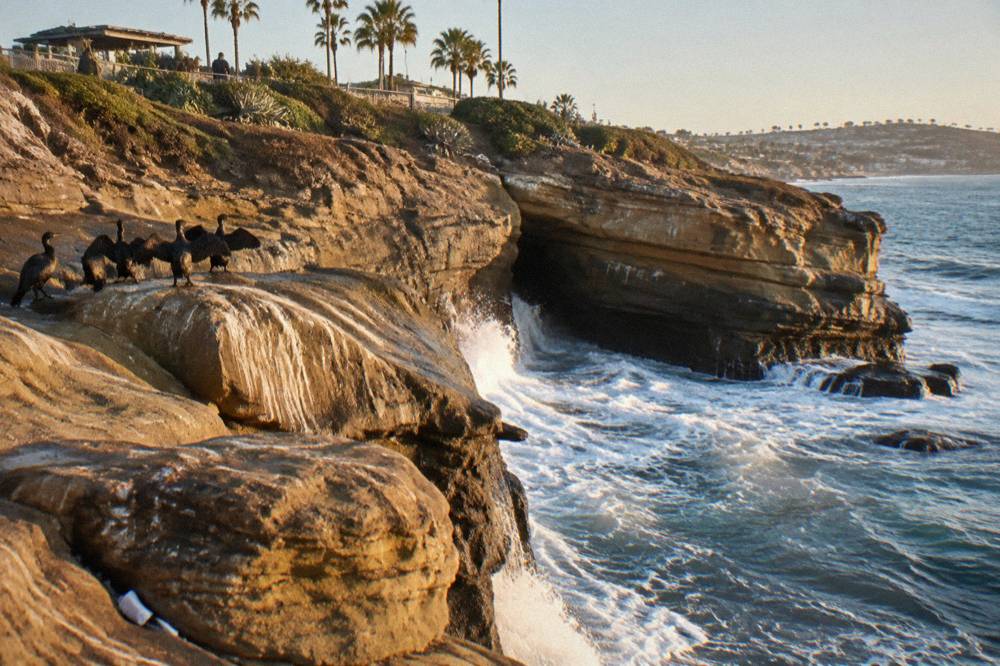
Yes, watching seals and sea lions around the Cove is free. The animals haul out on the rocks and the viewing areas above them are public, so the show costs nothing and runs all day. One rule matters: Children's Pool Beach, a short stretch south along the coast, closes to people from December 15 to May 15 for harbor seal pupping, and the seawall viewing area stays open through that closure.
The wildlife is the reason many people come to La Jolla in the first place, and it is the most reliably free thing in the neighborhood. Sea lions haul out on the rocks around the Cove and the point, and harbor seals gather at Children's Pool, and both can be watched at length from public walkways without paying anyone anything. There is no boat to book and no platform to rent. The viewing is from the shore, and the shore is public.
The one seasonal rule to know concerns Children's Pool Beach, the small protected stretch a short way along the coast from the Cove. It closes to people on the sand from December 15 to May 15 each year for harbor seal pupping, and the seawall viewing area above it stays open throughout, which means the seals are actually easiest to watch during the closure, from the wall, with nobody on the beach disturbing them. If your trip falls in that window, the closure is not a loss; it is the best viewing of the year.
The general etiquette point is worth one line even though it costs nothing: keep distance from the animals, stay behind the barriers on the walkways, and let the haul-outs stay quiet. The free show stays free as long as the animals keep choosing these rocks.
Where Can You Park Near La Jolla Cove?
No published rate covers parking at La Jolla Cove, so the meter or sign at your spot is the only authority, and any claim of free parking there deserves suspicion. Transit is the concrete alternative: from October 1 2026 the MTS adult one-way fare is $3, the Adult Regional Day Pass is $8 including a $1 card fee, and riders 18 and under travel free through June 2027 with a reduced-fare PRONTO account.
Parking is the one part of a La Jolla Cove trip this site could not pin to a number, and rather than guess, the right instruction is the plain one: read the sign in front of you. Curb parking along the coast is metered and time-limited in the way popular beachfront streets usually are, rates change, and no confirmed official page lays out a current figure for the Cove specifically. Treat the posted sign as the whole truth and plan for the possibility that it costs money and fills early. More of these guides are collected on Free Things To Do In San Diego.
The transit alternative deserves more attention than it usually gets, because the fare structure is now simple enough to be a real option. From October 1 2026 an adult one-way MTS fare is $3, and the Adult Regional Day Pass is $8 including a $1 card fee, which covers a day of hopping on and off without ever circling a block looking for a curb. Riders 18 and under travel free through June 2027, though only with a reduced-fare PRONTO account set up in advance, so families should sort that registration out before the trip rather than at the stop.
The third option is to restructure the day so the car is not part of it. A morning walk downtown, a transit ride north, and an afternoon on foot along the coast removes the parking question entirely, and the pairing section at the end of this page sketches exactly that shape. The short version: the Cove is free, the parking is the one open question, and transit plus timing is the cleanest way around it.
What Else Is Free Near La Jolla Cove?
Plenty. The coastal walkway is free to walk, the tide pools on the rocky shelves are free to explore at low tide, the seawall at Children's Pool gives free viewing year round, and the Museum of Contemporary Art San Diego drops its $25 ticket on the third Thursday of each month and for visitors 25 and under. None of these needs a booking, a pass or a membership.
The walkway is the spine of the free day. The coastal path above the Cove runs along the top of the rocks and connects the viewing points, and every step of it is public and free. It is also where the best of the neighborhood's free sights sit: the cave mouth seen from above, the sea lions on the rocks below, the curve of the coast to the north, and the evening light that makes the whole stretch famous. Give it an hour and it costs nothing but the hour.
The tide pools are the second free draw, and they run on the tide table rather than the clock. At low water the rocky shelves around the Cove hold pools with anemones, crabs and small fish, and exploring them costs nothing; the practical guide to free tide pools in La Jolla covers where to look and how to time it. The only rule is the ocean's: go on a falling or low tide, watch your footing on wet rock, and never turn your back on the surf.
Beyond those two, the free list stretches out along the coast and up the hill. The seawall at Children's Pool is free to walk and gives the seal viewing described above. The museum's third-Thursday window, already covered in the costs section, turns a $25 ticket into a free one once a month. And the wider neighborhood holds more than this page has room for, which is why the full free things to do in La Jolla guide exists as its own page.
How Does La Jolla Cove Compare With Other Free San Diego Spots?
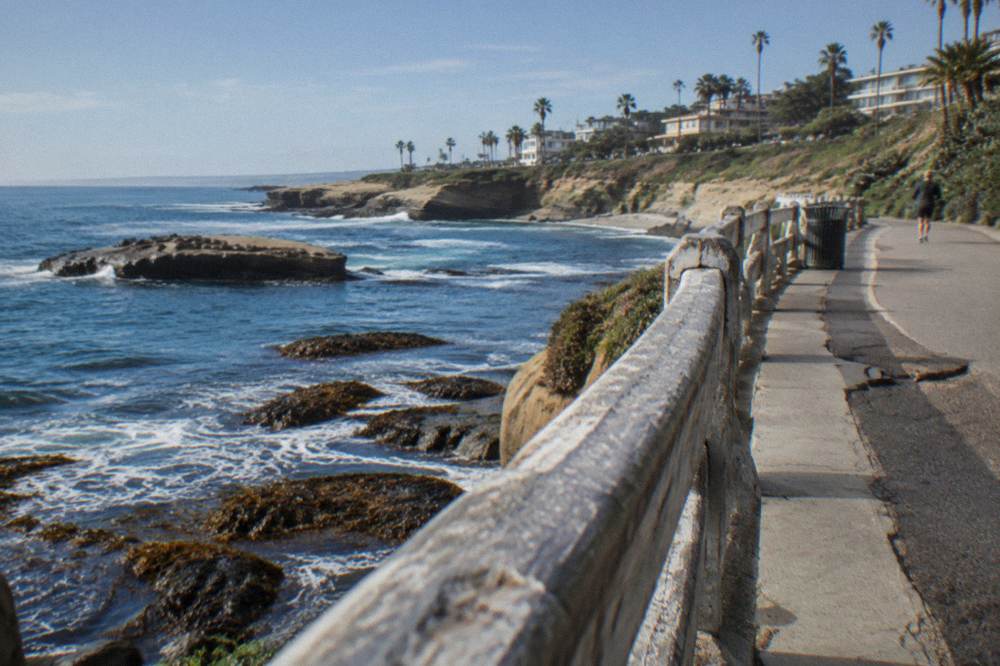
La Jolla Cove stacks up well against San Diego's other free spots because its coastline itself costs nothing, leaving only parking as the open question. Balboa Park's grounds are free but parking is paid through December 31 2026. Cabrillo National Monument charges $20 per vehicle outside fee-free days, and Torrey Pines State Beach lots run $10 to $25 per vehicle while the Reserve is closed to about March 1 2027.
The comparison is worth making because "free" means different things at different spots in this city, and the Cove sits near the honest end of the scale. At Balboa Park, the gardens and grounds cost nothing but the parking regime is firmly paid: enforced 8am to 6pm daily except nine city holidays, running through December 31 2026, with City of San Diego residents parking free in the seven general lots after a one-time $5 online registration and everyone else paying, though the first three hours at the Lower Inspiration Point lot are free for all. The city's own parking page carries the full rate table.
At Cabrillo National Monument on Point Loma, the model is a straight entrance fee: $20 per private vehicle or $10 per person on foot or bike, valid seven days, with the remaining fee-free days in 2026 falling on October 27 and November 11 and applying to US citizens and residents. The free part of Cabrillo is seasonal rather than structural: gray whales pass the western overlooks from mid-to-late December through March, with peak migration in mid-January, and the monument's pages track the watching season.
Torrey Pines is the cautionary tale of the set. The State Natural Reserve is closed to all visitors, trails and upper lots included, from September 22 2026 through February 2027 for utility and accessibility construction, with full access expected March 1 2027. The beach lots and Torrey Pines State Beach stay open at $10 to $25 per vehicle. Set against those three, the Cove's profile is simple: the attraction is free, the parking is unconfirmed rather than expensive, and nothing about the visit requires a calendar or a resident ID.
| Free San Diego spot | Entry cost | The catch |
|---|---|---|
| La Jolla Cove | Free | Parking has no published rate; read the sign |
| Balboa Park grounds | Free | Parking paid through Dec 31 2026; residents free after $5 registration |
| Cabrillo National Monument | $20 per vehicle | Free only Oct 27 and Nov 11, US citizens and residents |
| Torrey Pines State Beach | Beach open, lots $10 to $25 per vehicle | The Reserve itself is closed to about March 1 2027 |
| Children's Pool seawall | Free | The beach closes to people Dec 15 to May 15 |
Can You Pair La Jolla Cove With A Free Walking Tour?
Yes, as a day pairing rather than a shared route: no free walking tour covers the Cove itself, but the city's pay what you want walks slot neatly on either side of it. The Downtown And Waterfront Walk From The Gaslamp Arch runs two hours and 30 minutes from the Gaslamp Quarter Arch and is rated 4.72 across 150 GuruWalk reviews. The UCSD Campus Walk In La Jolla runs one hour and 15 minutes and has no reviews yet.
The downtown walk is the stronger half of the pairing. It is a pay what you want GuruWalk tour that meets at the Gaslamp Quarter Arch at 222 Fifth Ave, runs two hours and 30 minutes in English, and covers the historic downtown and waterfront ground between the Gaslamp Quarter and the harbor, ending down at Seaport Village. It is the only walk on this site's roster with a rating behind it, 4.72 across 150 GuruWalk reviews, and it earns a morning easily. After the walk, extend the day north: the harbor, a transit ride or a short drive, and an afternoon on the free coastline at the Cove, with the seals, the walkway and the sunset carrying the second half of the day at no cost.
The second walk stays inside La Jolla itself, which makes it the natural companion if you would rather not leave the neighborhood. The UCSD Campus Walk In La Jolla is a pay what you want GuruWalk tour, one hour and 15 minutes in English, meeting at the University Center sign at 9500 Gilman Dr. It is a new listing with no reviews yet, so there is no rating to report, only the walk itself: the University of California San Diego campus and its adjacent landmarks, a different La Jolla from the coast. Pair this with the Cove by sequence rather than geography: campus in the late morning, the shoreline in the afternoon, and the day covers both faces of the neighborhood for the price of whatever you choose to tip.
For a fuller version of that idea, the plan for one free day in La Jolla sequences the Cove, the tide pools and the rest of the coast into a single walking day. However you build it, the arithmetic stays the same: the walks are pay what you want, the Cove is free, and the only line in the budget with a question mark over it is the parking.
Common Questions About La Jolla Cove
Is La Jolla Cove Free?
Yes. The Cove itself is public coastline with no gate, no ticket booth and no admission charge, and the walkway above it is free to use. The paid items sit around it: Sunny Jim Cave charges entry through the adjoining store, the Museum of Contemporary Art San Diego charges $25 outside its free windows, and parking has no published rate, so the sign at your spot decides.
Is Sunny Jim Cave Free To Enter?
No. The cave is entered through the adjoining store, which charges and posts the current price at the entrance; no confirmed figure is published in advance. Viewing the cave from the public walkway above costs nothing.
Is Parking At La Jolla Cove Free?
No published rate covers parking at the Cove, so there is no honest yes or no. Read the meter or sign at your spot. The transit alternative from October 1 2026 is a $3 adult one-way MTS fare or an $8 Adult Regional Day Pass including a $1 card fee, with riders 18 and under free through June 2027 on a reduced-fare PRONTO account.
Can You See Seals At La Jolla Cove For Free?
Yes. Sea lions haul out on the rocks around the Cove and harbor seals gather at Children's Pool, and both are watched free from public walkways. Children's Pool Beach closes to people from December 15 to May 15 for pupping, but the seawall viewing area stays open through the closure.
Is The Museum Of Contemporary Art San Diego Free?
Conditionally. The La Jolla location charges $25, with two standing exceptions: the third Thursday of each month is free, and entry is free for visitors 25 and under. Outside those windows the ticket applies.
Can You Visit La Jolla Cove Without A Car?
Yes. The Cove itself is walkable from the surrounding neighborhood, and MTS covers the city from October 1 2026 at a $3 adult one-way fare or an $8 day pass including a $1 card fee. Riders 18 and under travel free through June 2027 with a reduced-fare PRONTO account set up in advance.