What Are The Pros And Cons Of Free Tours In San Diego?
The honest pros and cons of pay what you want walking tours, plus the three free walks that actually run in San Diego and how to judge one before you go.

What Are The Pros And Cons Of Free Tours In San Diego?
The pros of a free tour are a low entry cost, a local guide who works for tips, and a pace set by the group rather than a script. The cons are variable quality, no guarantee the guide knows the city deeply, pressure some walkers feel at tipping time, and thin coverage outside the core neighborhoods. In San Diego the choice is concrete: three pay what you want walks cover downtown, Old Town, and the UC San Diego campus.
The word free does a lot of quiet work in the phrase free tour. Nobody leads a two hour walk for nothing. The guide fronts the time and the storytelling, and recovers it through tips collected at the end, so the walker's cost is decided after the service rather than before it. That inversion is the whole format. Everything people love about free tours, and everything that occasionally frustrates them, follows directly from moving the payment to the end of the walk.
San Diego's version of the question is unusually easy to answer, because the roster is small and knowable. Exactly three pay what you want walks run here: a downtown and waterfront walk on GuruWalk, an Old Town walk on freetour.com, and a UC San Diego campus walk on GuruWalk. The most established is the Downtown And Waterfront Walk From The Gaslamp Arch, rated 4.72 across 150 GuruWalk reviews, and you can See this free tour on its GuruWalk page. The other two are newer listings with no reviews yet, which is itself part of the con side of the ledger.
Before the details, the short version of both columns. A free tour trades a guaranteed standard for a guaranteed floor: you cannot lose more than the walk's duration and the tip you choose to give, and you cannot know in advance which guide you will draw.

The two sides of the deal, side by side:
| Pros | Cons |
|---|---|
| No upfront cost, the tip sets the price | Quality varies from guide to guide |
| Guides are paid to earn the room, not just to show up | No refund to claim if the walk disappoints |
| Suits a first day in a new city | Routes stick to the guide's script |
| Easy to leave at the midpoint if it is not working | The tipping moment can feel awkward |
| Often small, social groups | Thin coverage outside the core neighborhoods |
Neither column is hypothetical here. The downtown walk's review history shows the format at its best, a guide with a long public track record and a rating that reflects it. The two unreviewed walks show the risk side, listings a walker books on trust alone.
How Does A Pay What You Want Walking Tour Actually Work?
A pay what you want walk is free to book and free to join, and the guide is paid only by what each walker chooses to hand over at the end. You reserve a spot online, meet at a stated point, and the walk runs on a fixed route for a stated duration. If the walk disappoints, a small tip or none at all is the whole cost.
The mechanics are simple. You reserve a place online at no charge, which holds your spot and gives the guide a headcount. You show up at a published meeting point at the stated time. The guide leads the route, talks for the stated duration, and at the end the hat, literally or figuratively, comes out. All three San Diego walks publish their meeting points and durations: the Gaslamp Quarter Arch at 222 Fifth Avenue for the downtown walk, the Robinson Rose House for the Old Town walk, and the University Center sign at 9500 Gilman Drive for the campus walk.
The tip itself has no published rate, and none of the three walks states a suggested amount. Some walkers set a figure in advance and pay it if the guide earns it. Others decide in the final minutes, based on what the walk delivered. Both approaches are within the format's rules. The awkward minute at the end is real, and it is the price of admission being zero. For a longer discussion of amounts and etiquette, read how much to tip a free walking tour, and for the underlying question of what free really means here, see whether free tours are actually free.
Getting to the meeting point is often the only fixed cost of the day. MTS and NCTD fares rise on October 1 2026, with the adult one-way fare at $3 and the Adult Regional Day Pass at $8 including a $1 card fee, and the details sit on the fare change page. Riders 18 and under travel free through June 2027 with a reduced-fare PRONTO account.
The mechanic is simple enough to state in one line, but its consequences run through everything that follows: why the guides try hard, why the quality varies anyway, and why the honest answer to whether a free tour is worth it depends on which walk and which guide.
Which Free Walking Tours Run In San Diego?
Three pay what you want walks run in San Diego: a downtown and waterfront walk on GuruWalk, an Old Town walk on freetour.com, and a UC San Diego campus walk on GuruWalk. The downtown walk is the only one with a review history, and the Old Town and campus walks are new listings with no reviews yet. All three are led by independent guides, not by this site.
The Free Things To Do In San Diego directory lists exactly three walks, and this page covers all of them. None of them is operated by this site. Each is an independent guide's listing on GuruWalk or freetour.com, and the full walkthrough of what each covers sits in the guide to San Diego free walking tours.
The roster at a glance:
| Walk | Platform | Duration | Meets At | Reviews |
|---|---|---|---|---|
| Downtown And Waterfront Walk From The Gaslamp Arch | GuruWalk | 2 hours 30 minutes | Gaslamp Quarter Arch, 222 Fifth Ave | 4.72 across 150 reviews |
| Old Town Walk From Robinson Rose House | freetour.com | 2 hours | Robinson Rose House | No reviews yet |
| UCSD Campus Walk In La Jolla | GuruWalk | 1 hour 15 minutes | University Center sign, 9500 Gilman Dr | No reviews yet |
The Downtown And Waterfront Walk From The Gaslamp Arch covers the Gaslamp Quarter, the harbor with the USS Midway, the Star of India and the Unconditional Surrender statue, and ends at Seaport Village. Its meeting point is the Gaslamp Quarter Arch at 222 Fifth Avenue, the neighborhood sign described on the Gaslamp Quarter's own site. The USS Midway along the harbor route is an aircraft carrier with its own museum, covered at the museum's site. You walk past it on the tour, you do not board it.
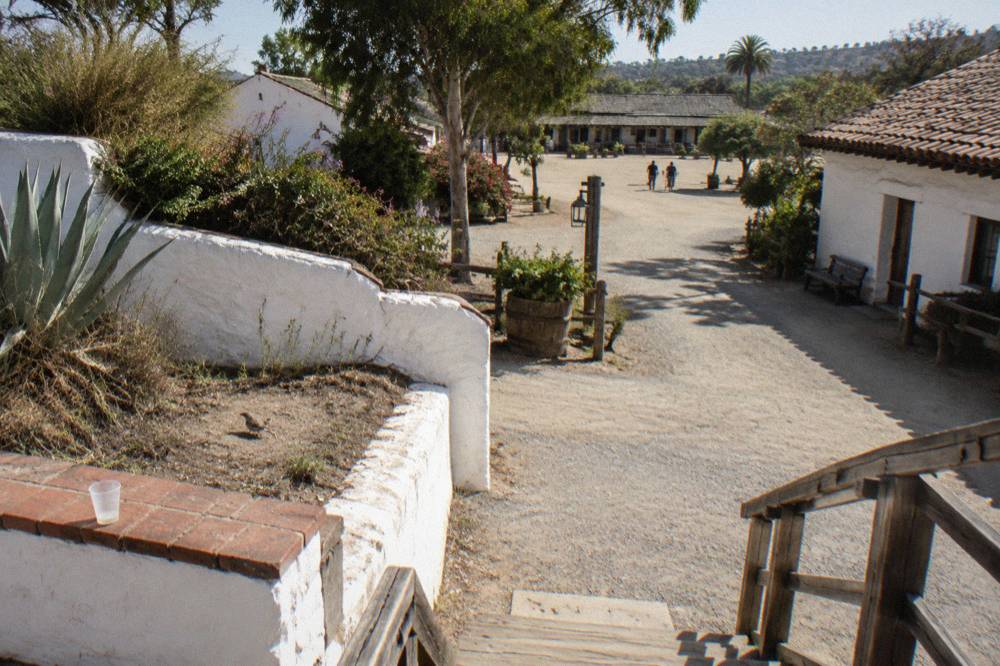
The Old Town Walk From Robinson Rose House runs two hours on freetour.com, starting at the Robinson Rose House in Old Town San Diego State Historic Park, which California State Parks documents at the state parks page. It has no reviews yet, so the honest pitch is the ground itself rather than a track record: the early city history around Old Town, walked at a pace a guide sets.
The UCSD Campus Walk In La Jolla runs one hour and fifteen minutes from the University Center sign at 9500 Gilman Drive, on GuruWalk, and it also has no reviews yet. A campus walk is a different animal from a downtown one. It suits a day that is already anchored in La Jolla more than a first visit to the city, and it is the shortest of the three, which makes it the lowest commitment on the roster.
What Are The Real Pros Of Free Tours?
The real pros are financial risk near zero, guides who earn their fee walk by walk, and a social format that suits solo travelers and first time visitors. A free tour also lets you audition a neighborhood before spending money in it, and the best guides deliver stories a guidebook never prints. In San Diego the downtown walk's rating across 150 reviews shows the ceiling can be high.
The first pro is the floor. Because the payment happens after the service and at an amount you set, a bad free tour costs you an afternoon, not an afternoon plus a ticket price. That changes the decision completely. A walker who would never gamble fifty dollars on an unknown paid tour will happily gamble two hours on an unknown free one, and the format rewards that instinct more often than not, because the guide has to earn the room from the first minute.
The second pro is the incentive. A guide paid by tips cannot coast. Every joke that lands, every question answered well, every shortcut that saves the group ten minutes in the sun goes into the same pot the guide is walking toward. Paid tours can be excellent too, but the free format aligns the guide's interest with the walker's in an unusually direct way. The downtown walk's rating across 150 GuruWalk reviews is what that alignment looks like when it works.
The third pro is social. Free walks draw solo travelers, couples on a budget, and people who simply like walking with strangers, and the shared tip jar gives the group a mild common cause. For a first day in a city, a two and a half hour loop through downtown, the harbor and Seaport Village is a cheap way to get the geography straight before spending anything elsewhere.
The fourth pro is quieter: the money goes to the person who did the work. A tip handed to a guide is the guide's income, not a share split with a marketing budget. Walkers who care about that sort of thing tend to like the format for exactly that reason.
What Are The Honest Cons Of Free Tours?
The honest cons are uneven quality, because anyone can list a walk; no refund logic, because there was no payment to refund; routes fixed to the guide's script; and a tipping moment many walkers find awkward. Coverage is also thin outside the core neighborhoods. Two of San Diego's three walks have no reviews yet, so a walker books those on trust alone.
The first con is the mirror of the format's best feature. If anyone can list a walk, then some walks will be run by guides with deep local knowledge and real skill, and some will not. The review system exists to sort that out, but it only works where reviews exist. San Diego's Old Town and campus walks are the live example: both are new listings with no reviews yet, and a walker who books either one is betting on the guide's page and their own judgment. That is not a knock on the guides. It is an honest statement of what is knowable in advance.
The second con is the tipping moment itself. Some walkers feel genuinely pressured at the end of a walk, especially in a small group where the tip is visible. Some guides lean on the moment harder than others. There is no refund logic to fall back on either, because there was no payment to refund: a walker who leaves at the midpoint has lost only time, which is either the format's mercy or its coldness, depending on the afternoon.
The third con is coverage. Free walks cluster where the tips are, which means downtown cores and famous quarters. San Diego's three walks cover downtown and the waterfront, Old Town, and the UC San Diego campus, and that is the entire map. No free walk covers Balboa Park, the beaches, Coronado, or La Jolla's coast, so a visitor building an itinerary around free tours alone will run out of free tours quickly.
The fourth con is the script. A guide who runs the same route daily, tip-dependent, tends to polish a fixed story. It can be a great story. But a walker who asks to linger, detour, or skip a stop is asking the guide to spend tip-earning minutes, and the answer is not always yes.
How Do You Judge A Free Tour Before You Show Up?
Judge a free tour the way you would judge any guide: by the review count behind the rating, the clarity of the meeting point, the stated duration, and the route description. A rating from 150 reviews means something different from a rating built on a handful. Check the language, the group size cap if one is stated, and whether the walk's ground matches what you actually want to see.
The review count is the strongest signal available, and it deserves more weight than the rating number itself. A 4.72 across 150 GuruWalk reviews is a pattern; a high rating from a handful of reviews is a small sample; and no reviews at all means the page tells you nothing about the guide's delivery, only about the route and the logistics. None of those situations is disqualifying. They just call for different expectations.
| What To Check | Why It Matters |
|---|---|
| Review count behind the rating | 150 reviews is evidence, a handful is noise, none is a blank slate |
| Meeting point and exact address | A vague meeting spot costs you the walk before it starts |
| Stated duration | 75 minutes and 150 minutes are different plans for the same day |
| Route description | The walk's ground should match your must-sees, not just the neighborhood name |
| Language | All three San Diego walks run in English |
Applied to this roster, the checklist sorts quickly. The downtown walk states a precise meeting point, a two and a half hour duration, and a route through the Gaslamp Quarter, the harbor and Seaport Village, and it carries 150 reviews behind its rating. The Old Town and campus walks state their meeting points and durations clearly too, but their review columns are empty, so the honest move is to reread their pages close to the day and book them as the quiet bets they are.
Is A Free Walking Tour Worth It In San Diego?
For most visitors, yes: a free walking tour is worth the one to two and a half hours it asks, because the downside is capped at a tip you control and the upside is a local's route through a neighborhood you would otherwise skim. In San Diego the downtown and waterfront walk is the strongest of the three on numbers alone, and the Old Town and campus walks are quiet bets on new guides.
The verdict splits by walker. A first time visitor with one afternoon downtown should take the Downtown And Waterfront Walk From The Gaslamp Arch: it has the review history, the stated route through the Gaslamp Quarter, the harbor and Seaport Village, and the longest duration of the three. A visitor already anchored on history should take the Old Town walk from the Robinson Rose House. A visitor spending the day in La Jolla with a spare hour and fifteen minutes is the natural audience for the UCSD campus walk.
The format's bargain, stated once more, is that you trade certainty about the standard for certainty about the floor. In a city where the paid alternatives cost real money and the free roster is exactly three walks deep, that bargain is easy to evaluate: one established walk with 150 reviews behind it, and two new listings a curious walker can take a chance on for the price of a tip.

Common Questions About Free Tours
What Are The Pros And Cons Of Free Tours?
The pros are no upfront cost, a guide paid to earn the tip, and a low risk way to learn a neighborhood on foot. The cons are uneven quality, no refund to claim, and an awkward tipping moment. In San Diego, three pay what you want walks run: downtown and the waterfront on GuruWalk, Old Town on freetour.com, and the UC San Diego campus on GuruWalk.
Are Free Tours Actually Free?
The walk itself is free to book and free to join, and no walk in San Diego's roster of three carries an additional cost. The guide is paid by tips, so the real price is whatever you decide to hand over at the end. If the walk is poor, the cost can be zero.
How Much Should You Tip On A Free Walking Tour?
There is no published rate, and none of San Diego's three walks states a suggested amount, so the figure is entirely the walker's call. The honest rule is to decide what the walk was worth before the guide is standing in front of you, and to pay it without renegotiating at the door.
Do Free Tours Cover The Same Ground As Paid Tours?
In San Diego the downtown walk covers the Gaslamp Quarter, the harbor with the USS Midway, the Star of India and the Unconditional Surrender statue, and ends at Seaport Village. Coverage elsewhere is thinner: the other two walks cover Old Town and the UC San Diego campus, and no free walk in the city covers Balboa Park, the beaches, or Coronado.
What Happens If Nobody Tips The Guide?
The guide earns nothing for the hours spent, which is the risk the format asks them to carry. There is no debt and no consequence beyond the guide's own arithmetic. The convention is simple: a walk you finished and enjoyed is a walk you pay for.
Are Free Walking Tours Good For First Time Visitors?
Yes, especially on the first day. A two and a half hour walk from the Gaslamp Quarter Arch orients a visitor to downtown, the harbor, and Seaport Village in one loop, and costs nothing beyond the tip. The tradeoff is polish: a free walk replaces a paid tour's production values with a local's pace, and which one wins depends on the guide you draw.