How Much Should You Pay On A Free Walking Tour In San Diego?
A plain answer to what pay what you want really means on San Diego's free walking tours, how the tipping model works, and what to weigh before you settle on your amount.
How Much Should You Pay On A Free Walking Tour In San Diego?
There is no fixed amount, and nobody on a pay what you want walk will quote you one. The guiding itself is free on all three San Diego walks in this site's roster, and the payment is whatever you choose to hand the guide at the end. The honest benchmark is what the guide's time and local knowledge were worth to you, weighed against your own budget, not a figure somebody else publishes.
The label "free walking tour" is a pricing statement, not a promise about the guide's afternoon. All three San Diego walks in this site's roster run on the same structure: nothing to pay to join, no ticket, no minimum, and a voluntary payment at the end. The Downtown And Waterfront Walk From The Gaslamp Arch is the one with a public track record, rated 4.72 across 150 GuruWalk reviews, and you can See this free tour on its GuruWalk page. The other two, the UCSD and adjacent landmarks tour on GuruWalk and the Old Town San Diego Free Tour on freetour.com, are newer listings with no reviews yet, and the money works the same way on both: pay what you want.
This site does not publish a suggested tip either, and for a simple reason. It does not operate the walks, employ the guides or take a booking, and the pay what you want model hands the pricing decision to the walker deliberately. A number quoted anywhere is that writer's opinion dressed up as a rule. What actually helps is the reasoning behind the number you settle on: how the model works, what to weigh, and how to handle the moment at the end of the route.
Why Do The Guides Work For Tips Instead Of A Ticket Price?
The tip model shifts the risk from the visitor to the guide. You pay nothing up front, so a weak walk costs you nothing but time, and a strong one earns what it deserves. The guide takes the gamble that enough people will reward the work. That is why free tours tend to be lead-generation businesses: the walk itself is the product demonstration, and the tips are the revenue.
The guides behind these listings work for themselves. GuruWalk and freetour.com are directories: they host the walk pages, describe the meeting points and connect walkers to guides, and the person leading you past the Gaslamp Arch or the Robinson Rose House is not on either company's payroll. The money you hand over at the end goes to the guide. There is no ticket revenue to divide, because there is no ticket.
For the visitor, the arrangement removes the risk from the transaction. A fixed-price tour collects the money before you know whether the guide is any good. A tip-based tour collects nothing until the walk has finished, so a flat, uninspired route earns the guide little and a sharp one earns well. The incentive runs in the walker's favour the whole way around the block.
For the guide, the gamble is that the afternoon pays. That is why tip-based walks tend to be the most rehearsed tours in any city: the product has to sell itself in real time, to a group that has not paid a cent and can still walk away having paid nothing. The question of whether these tours are genuinely free, or free in name only, has its own answer, and whether free walking tours are really free takes it in full.
What Should You Weigh Before You Decide Your Amount?
Five things move most people's number: the length of the walk, the depth of the storytelling, the size of the group, whether the guide answered your questions, and what the same ground would cost on a fixed-price tour elsewhere. None of the three San Diego walks sets a suggested amount, so the arithmetic is genuinely yours. Judge the guide's effort rather than the tour's label.
The first four factors are about the guide's work. Length is the easiest: the three walks run from 1 hour and 15 minutes to 2 hours and 30 minutes, and a guide who holds a longer route for its full stated time has given you more of the working day. Story quality is the real product, because names and dates sit free on plaques all over the city; context, argument and the guide's own local knowledge are what you are paying for. Group size and responsiveness go together: a guide answering six people can go deep, while a guide herding twenty has to stay shallow, and how far the walk bent to the group's questions tells you what the guide thought the job was.
The fifth factor is yours. The model accepts a thin wallet; it only asks for honesty about intent. Someone who genuinely cannot stretch to much is inside the deal. Someone who took the walk always intending to give nothing is not, and the difference is not subtle.
| What to weigh | Why it moves the number | A fair question to ask yourself |
|---|---|---|
| Length of the walk | The three San Diego walks run from 1 hour and 15 minutes to 2 hours and 30 minutes, and the longer routes take more of the guide's working day | Did the guide hold the route for the full stated time? |
| Story quality | Names and dates are free on any plaque; context and the guide's own knowledge are the product | Did you learn things a sign would not have told you? |
| Group size | A guide answering six can go deep; a guide herding twenty has to stay shallow | Did the guide reach your questions? |
| Responsiveness | Adjusting the route, slowing down and taking the awkward question is live work | Did the walk bend to the group at all? |
| Your own budget | The model accepts thin wallets; it asks for honesty about intent | Can you give something without stretching? |
If you want the fuller argument for and against the format before you set a number, the pros and cons of free walking tours lays it out. The short version for tipping purposes: the format is a bargain when the guide is good and a waste of an afternoon when the guide is not, and your payment is the only mechanism that tells the guide which one you just had.
How Does Handing Over The Money Actually Work?
Payment happens at the end, in person, after the walk finishes. Cash is the one method every guide can accept, so bring some. Some guides can take a card or an app payment, but that varies by guide and by walk, so check before you rely on it. Nobody chases you, and nobody sets a minimum: the model only works because payment is voluntary, which is exactly why the decision deserves thought.
Cash is the safe assumption. It needs no signal and no app, and it transfers in a second at the final stop. Some guides can accept a card or an app payment at the end, but that varies from guide to guide, so ask at the start of the walk rather than discovering the limit during the goodbyes.
Timing matters more than people expect. Decide your amount a stop or two before the end, not during it. The final minutes of a walk are a social scramble: photos, thanks, directions to lunch, half the group already halfway down the street. A decision made there is rushed, and rushed decisions default downward. Work the number out quietly while the route is still moving, and the handover becomes a two-second transaction instead of a negotiation you fumble in front of twenty strangers.
Etiquette is short. Hand it to the guide directly, with a word. If the walk was poor, you can say why; that is feedback, and it is worth more than a token payment pretending otherwise. If you cannot give anything, saying so plainly beats slipping away. The one move the model has no answer for is the quiet early exit, which takes the walk and leaves the guide with nothing to judge.
What Are The Pay What You Want Walks In San Diego?
Three walks make up the whole roster. The Downtown And Waterfront Walk From The Gaslamp Arch runs 2 hours and 30 minutes in English from the Gaslamp Quarter Arch at 222 Fifth Avenue, rated 4.72 across 150 GuruWalk reviews. The UCSD and adjacent landmarks tour on GuruWalk runs 1 hour and 15 minutes from the University Center sign. The Old Town San Diego Free Tour on freetour.com runs 2 hours from the Robinson Rose House.
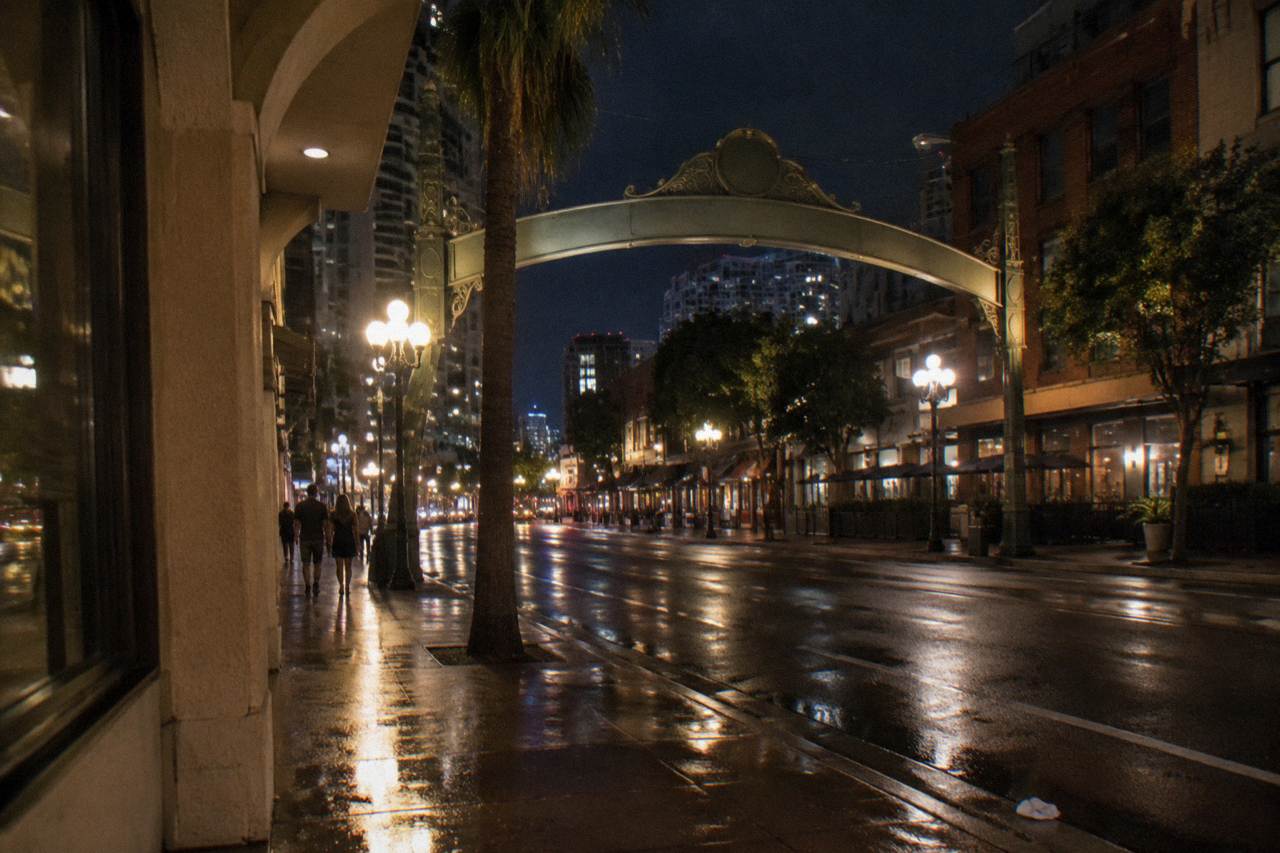
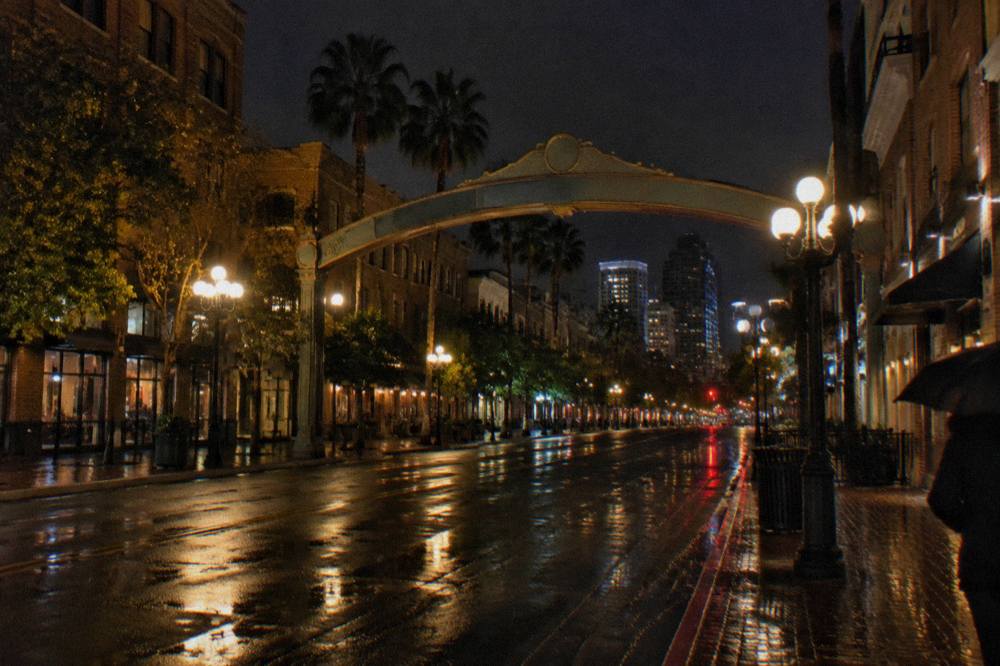
The Downtown And Waterfront Walk From The Gaslamp Arch is the reviewed one, 4.72 across 150 GuruWalk reviews, and the only walk on the roster with a rating history. It meets under the Gaslamp Quarter Arch at 222 Fifth Avenue, in the historic district covered by the Gaslamp Quarter's own district site, and it covers the Gaslamp Quarter, the harbor with the USS Midway, the Star of India and the Unconditional Surrender statue, ending at Seaport Village. The USS Midway itself is a paid museum, with the visit details on the museum's own page, but the walk costs nothing to join and the harbor landmarks are seen from the public waterfront.
The UCSD and adjacent landmarks tour on GuruWalk is a different animal: 1 hour and 15 minutes, meeting at the University Center sign at 9500 Gilman Drive, on the UC San Diego campus in La Jolla. It is a new listing with no reviews yet, so nobody has published a verdict on it, and this site will not invent one. The money works the same way: pay what you want, at the end. The wider set of guides lives on Free Things To Do In San Diego.
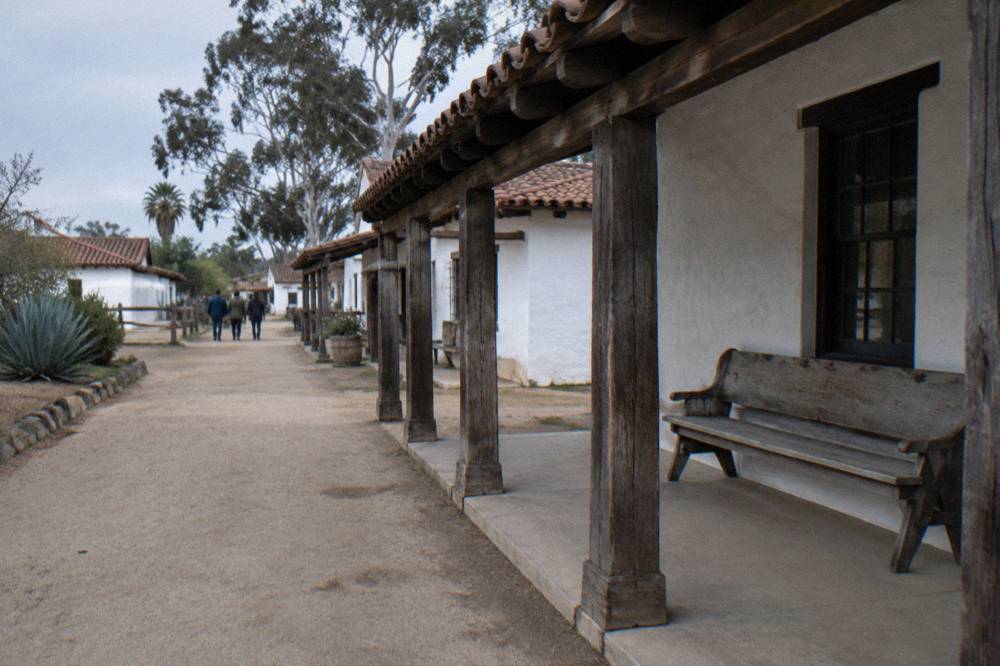
The Old Town San Diego Free Tour on freetour.com runs 2 hours from the Robinson Rose House in Old Town. It is also unreviewed so far. The walk is the pay what you want way to get an oriented route through Old Town's historic ground, and the same weighing applies when the guide finishes at the plaza.
| Walk | Where it is listed | Duration | Meets at | Reviews so far |
|---|---|---|---|---|
| Downtown And Waterfront Walk From The Gaslamp Arch | GuruWalk | 2 hours and 30 minutes | Gaslamp Quarter Arch, 222 Fifth Ave | 4.72 across 150 GuruWalk reviews |
| UCSD and adjacent landmarks tour | GuruWalk | 1 hour and 15 minutes | University Center sign, 9500 Gilman Dr | No reviews yet |
| Old Town San Diego Free Tour | freetour.com | 2 hours | Robinson Rose House | No reviews yet |
Three is the honest count. This site links to all three walks and no others, because a directory that implies a bigger roster than it holds is selling you something. When a page elsewhere promises dozens of free walks in San Diego, treat the number the way you would treat a suggested tip: as an opinion, and one worth checking.
Does A Bigger Group Change What You Should Give?
Not in the direction people assume. A larger group does not lower the bar for each walker, because the guide's effort per person does not shrink when the headcount grows; if anything, holding twenty people for two and a half hours is harder work than holding six. What a big group changes is the guide's total take, not any individual's fair share of the judgment.
Think of it from the guide's side of the final handshake. Twenty walkers giving a modest amount each can add up to a decent afternoon. Six walkers giving the same modest amount each cannot. The guide knows this and still runs small walks, which tells you the format is not a volume business everywhere, all the time. Your decision is not about the guide's total, though. It is about what the walk was worth to you, and that calculation does not change because strangers happened to show up the same morning.
There is one honest exception. If a group is so large that the guide could not reach you, could not hear your question and could not adjust the route, the responsiveness factor from the weighing table drops, and so can your number. That is a quality judgment, not a crowd judgment. A guide who holds a big group well has done more work, not less, and the payment should follow the work.
What If The Walk Was Disappointing?
Pay less, or pay nothing, and say why. The pay what you want model is a review you deliver in person, and a payment that does not match the experience teaches the guide nothing. The one thing not to do is hand over a full amount out of social awkwardness and leave the guide believing a weak walk earned it.
The model only functions if the payment carries information. A guide who gets a healthy amount after a flat walk learns the wrong lesson. A guide who gets little and hears, politely, that the stories felt scripted or the route felt rushed, gets something usable. The conversation is uncomfortable for about ten seconds. The silence of a mispriced tip lasts the guide's whole season.
There is a line between a disappointing walk and a bad day, and it is worth drawing before you judge. A guide whose route is disrupted by a street closure, a protest or weather is not the same as a guide who showed up unprepared. The first earned their amount with an honest effort under bad conditions. The second did not. Weigh the effort you saw, not just the outcome you got.
And if you genuinely cannot afford anything, say so. A guide who hears "this was great and I cannot manage it this month" has still been told the walk worked. A guide who watches you vanish at the last corner has been told nothing at all.
How Do You Decide In The Last Ten Minutes Of The Walk?
Run a quick three-part check: did the guide hold the full stated time, did you learn things a plaque would not have told you, and did the walk bend to the group at all. Answer those three and your amount is basically decided, because they are the same three factors that separate a working guide from a reading one. Decide before the final stop, hand it over directly, and say a word with it.
The three questions take about thirty seconds. The full stated time matters because the durations are published: 2 hours and 30 minutes for the downtown walk, 2 hours for the Old Town walk, 1 hour and 15 minutes for the campus walk. A guide who cuts a route short has unilaterally changed the product. The plaque test matters because it is the cleanest quality filter in the format: anything you could have read off a sign was free already, and the walk's value is everything on top of that. The bend test matters because it captures the live work, the part no script can fake.
Then commit. The most common failure at the end of a pay what you want walk is not stinginess, it is indecision: standing at the final stop, patting pockets, muttering, and finally handing over whatever note surfaces first. That is how people who fully intended to reward a good guide end up underpaying one. Decide while the route is still moving, and the ending stays clean.
A pay what you want walk also stacks well with the rest of a free day. The downtown walk ends at Seaport Village, the Old Town walk finishes in the state historic park, and both neighbourhoods hold enough free ground to fill the rest of the afternoon. The walks themselves cost nothing to join, which is the whole point, and the only money that changes hands is the amount you choose at the end.
Common Questions About Paying On A Free Walking Tour
How Much Should You Pay On A Free Walking Tour?
Whatever you judge the guide's time and knowledge to have been worth, within your budget. No fixed amount exists, none of the three San Diego walks publishes a suggested figure, and the guiding itself is free on all of them. Weigh the length of the walk, the depth of the storytelling, the group size and how far the guide bent to your questions, then decide before the final stop and hand it over directly.
Do You Have To Tip On A Free Walking Tour?
No, the payment is voluntary, which is what pay what you want means. Nobody chases you and nobody sets a minimum. The model only works because most people reward the work, though, so taking the walk with no intention of ever paying anything is outside the spirit of the deal, even if it is inside the rules.
Can You Pay By Card Or App On A Pay What You Want Walk?
Sometimes, but not reliably. Cash is the one method every guide can accept, so bring some. Some guides can take a card or an app payment at the end, but that varies by guide and by walk, so ask at the start rather than discovering the limit during the goodbyes.
Does A Bigger Group Mean You Can Pay Less Each?
Not really. The guide's effort per person does not shrink when the headcount grows, and holding twenty people for two and a half hours is harder work than holding six. What a big group changes is the guide's total take, not your own judgment of what the walk was worth to you. The honest exception is a group so large the guide could not reach you at all, which is a quality issue and can lower your number.
What If The Free Walking Tour Was Disappointing?
Pay less, or pay nothing, and say why. The payment is a review delivered in person, and a full amount handed over out of social awkwardness teaches the guide nothing. Do distinguish a disappointing walk from a bad day, though: a guide whose route was disrupted by weather or a street closure still put in the effort.
Which Free Walking Tours In San Diego Run On This Model?
Three walks make up the whole roster: the Downtown And Waterfront Walk From The Gaslamp Arch on GuruWalk, rated 4.72 across 150 GuruWalk reviews; the UCSD and adjacent landmarks tour on GuruWalk, which has no reviews yet; and the Old Town San Diego Free Tour on freetour.com, also with no reviews yet. All three are pay what you want, and this site links to all three and no others.